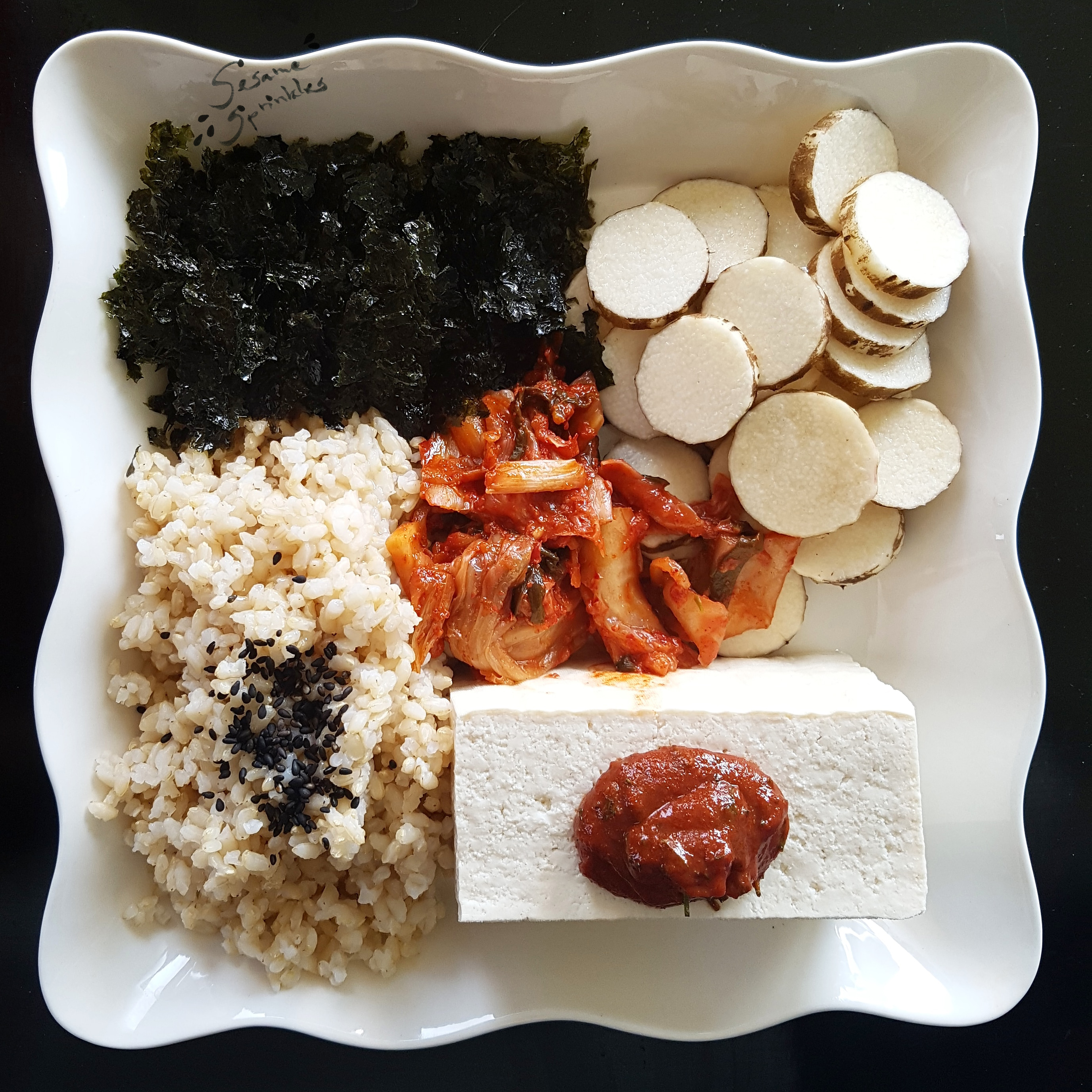
It’s one of the oldest methods of getting food: Foraging.
To forage means to search for food in nature. It is looking for food in the wilderness or similar uncultivated areas, i.e. somewhere the plants have not been intentionally planted or are being farmed by humans. 🚜
It used to be the daily life of prehistoric people, before agriculture secured a more stable supply of edibles. 🧑🌾👩🌾👨🌾
It remained the routine for hunter and gatherer cultures, and a survival method during times of scarcity. 🏹🎣🧺
But recently, it has suddenly become a hobby or exotic activity for modern city dwellers!* 🏙️
In every culture, people gathered food from their natural environment. Nowadays, however, most plant-based ingredients and mushrooms are farmed, and are referred to as “produce”. In the Western culturesphere, getting food is easy as long as one possesses the necessary money to purchase it. 💸
Yet, the knowledge about edible wild plants and mushrooms is priceless. What wild plants and mushrooms can be eaten? How can you find edible plants and mushrooms in nature? How do you distinguish edible plants from poisonous plants? This age-old knowledge is threatening to fade as modern food markets are primarily stocking the fruits of globalisation. 🍅🥕🌽🫑🍇
If you have been following my stories on Instagram, you know that I’ve been foraging in Korea for a couple of years now. (Mostly in areas in and around Seoul! Highlights of 2022, 2023, 2024 and 2025.) I am, however, no expert and I am constantly learning new things. My main teacher is an experienced Korean local, who has been foraging for several decades and graciously shares his knowledge with me. 🙏 While preserving what I have learned so far, this article shares hints, advice and recommendations about foraging.
Accordingly, this post offers basic information for foraging beginners. The focus lies on how to forage in Korea. There are general principles about foraging, which have not been written down. Some of them should be common sense. [And they make sense!] Others may be something you have not thought about before, unless you have experienced foraging yourself.
- Table of Content:
- ❗ Dos & Don’ts
- 🧺 What to forage
- 🗓️ When to forage
- 📍 Where to forage
- 🐍 What about wildlife
- 🎒 What to bring
- 👖 What to wear
- 📝 Final foraging advice
❗ The Dos & Don’ts of Foraging
First and foremost, here are a few words of advice in short and clear form! You will find more explanations in the text below…
✅ Do:
- Be moderate. Take small amounts for personal use.
- Be sustainable. Act responsibly towards nature and its inhabitants. When harvesting leaves or tree shoots, leave some so the plants can live on. If you dig a hole to get to a root, fill the hole with soil again afterwards.
- Bring your mobile phone. For emergencies and GPS navigation in case you get lost.
- Respect the local guidelines. If there is a sign to not collect nuts, mushrooms or something else, follow that rule. If you are not allowed to enter a certain area, do not trespass.
- Take your trash with you.
- Leave wildlife alone.
❌ Do not do:
- Do not eat anything if you don’t know what it is! There are many poisonous mushrooms and poisonous plants in Korea! Only eat things that you have identified clearly.
- Do not leave the trail if you are alone. While people do not recommend hiking by yourself, particularly going off the trail is risky. If there is an accident, there is noone who can quickly help you. (Whereas on the hiking trail, other hikers would occasionally pass by and be able to find you.)
- Do not litter. Nature is not a trash can. If you see trash, you are welcome to pick it up and dispose of it properly later.
- Do not smoke. Do not make a fire. Avoid anything that is a fire hazard. There are already too many instances of forest fires in Korea.
- Do not ask for foraging locations.
🧺 What to Forage
Depending on the location and the time of the year, different edibles can be found in nature. On the Korean peninsula, you can find a large diversity of plants with edible parts, e.g. leaves, sprouts, roots, bark (primarily for tea or medicine), flowers and fruits. 🌱🍁🍇 There are also many species of mushrooms, diverse kinds of seaweed and even lichen that are edible! 🍄🌿
It is crucial to identify whatever you are planning to consume, because there are many poisonous plants and poisonous mushrooms in Korea! ⚠️ Some plants are toxic for humans unless you know how to make them edible. [Future post in progress!] To this day, people severely suffer or die from eating poisonous mushrooms or plants. ☠️
Some organisms are used as traditional medicine, others are used as food, yet others are enjoyed as tea. Foraged food is consumed for enjoyment and/or nourishment, and not exclusively for medicinal reasons. Sometimes, “foraging” is used as the term for looking for food plants, while looking for edible mushrooms and medicinal plants may be called “wildcrafting”.
The Korean peninsula is located in the temperate climate zone and exhibits traits of the continental climate, specifically Dwa and Dwb in North Korea, and Dwa and Dfa in South Korea. Its climate features four seasons (spring, summer, fall, winter), plus a rainy season in summer, and a typhoon season in fall. South Korea is elongate, and temperatures vary between the northern and southern regions: On the mainland, the plant hardiness zones range from 6 and 7 to 8 on the mainland. The southernmost area Jeju Island, which represents hardiness zones 9a and 9b, is classified as subtropical.** Accordingly, Korea’s vegetation varies with location and the respective typography of a certain area. Different species of plants, mushrooms, lichen and seaweed grow in different parts of the peninsula.
Last but not least, you will find “wild food” in nature. The wild version of a plant, mushroom or seaweed tends to look different from the farmed version! For millennia, humans have cultivated other organisms, while striving to optimize them. 👨🌾👩🔬 (For instance, the ancestor of corn looks nothing like contemporary corn! 🌾➡️🌽 Also, many dog breeds hardly resemble wolves anymore. 🐺➡️🐕) In farms, vegetables, fruits and mushrooms are raised under ideal conditions. They have been bred and selected to attract modern consumers. Compared to their human-made cultivars, the wild forms can be smaller, bigger, less uniform, differently colored or something else – there are countless changes and variations! Besides their appearance, the taste and texture may be different, too! Typically, the smell and flavor of wild food items is stronger or more intense.


🗓️ When to Forage
When can you forage in Korea? Here is a very general answer to a general question: Different kinds of plants, mushrooms and seaweed will be around at different times of the year. In Korea, something can be foraged almost all year round, but the most plentiful seasons are spring and fall. 🗓️
This is an overview of what’s in season during the year:
Spring. 🌱 Once nature awakens from hibernation, plants grow quickly and almost simultaneously, so there is a lot to forage in spring! Korea houses several plants that are edible only when they are young and soft, i.e. new tree shoots as well as baby plants or sprouts. These so-called spring greens are best before being fully developed, but the plants’ growth speed changes with the weather. Timing is key for foraging, particularly in the case of spring greens! In the wild, they are available during a short time period (a few days). Come too early, and the greens are not visible yet. Come too late, and the plants already developed tough and stringy leaves. There are also many flowers that blossom in spring, and certain flowers are edible! 🏵
Summer. 🌞 In summer, being outdoors is the hardest because of the heat. There are a couple of fruits that can be harvested between June and August. But most fruits and nuts do not mature before late summer or fall. During Korea’s monsoon season, which is in June or July, foraging in the rain is rather unpleasant. It is actually risky, since the ground is wet and landslides can happen in mountainous areas.
Fall. 🍂 Autumn brings food in abundance: Firstly, most mushrooms appear now, and they last merely a few weeks. Certain mushroom species are also available during other seasons, but typically, Korean mushroom season is in autumn. Secondly, several fruits and nuts ripen in fall. In addition to that, edible roots should be harvested before the soil freezes and becomes too hard for digging up roots. After all, late fall is the time plants store energy inside their roots underground, so they also contain more nutrients.
Winter. ❄️ In winter, most plants are dormant, as the ground is frozen and occasionally covered in ice or snow. But at the ocean, there will be seaweed! Although diverse species of seaweed are visible throughout the year, most edible seaweed is harvested during the colder months, i.e. between late fall and late winter.
📍 Where to Forage
Wild and uncultivated food items can be found at diverse locations!
In the city, there are parks or roadside trees which may bear delicious fruit or nuts. In the mountains, forests and meadows, there are various wild herbs, mushrooms and fruits. ⛰️ At the coast and in the water, Koreans forage for seaweed and seafood like clams, snails, crabs and sea cucumbers. 🦪🐚 At rivers or mountain streams, there can be fresh water clams or snails. 🐌


You are not allowed to forage in national parks or nature reserves. 🏞️ If there is a sign to not collect e.g. acorns or chestnuts, please do respect that. There is a reason for the sign to be there. Often, it is because the fruits and nuts are an essential food source for precious wildlife. 🌰🐿️ A no brainer is to not take things from private property. ⛔ Also, be careful not to enter military territory, as there can be shooting ranges and possibly other hazardous installations. 🔫💣 There will be a warning sign and wired fence at such areas. ⚠️ If you were to forage illegally, penalty fees and legal actions may occur.

Sign saying “Warning. Do not enter.” 
Warning sign saying that entering the forest is prohibited as it belongs to a mushroom cooperation and a temple. Gurye, Mt. Jirisan, October 2023. 
Sign warning not to forage or litter. Gapyeong, Mt. Unaksan, February 2024. 
Warning sign at the entrance of a shooting range of the Korean army. October 2023. 
Poster in a park asking people to leave acorns and chestnuts for wild animals. Seoul, Gwanak mountain 2021.
Where can you find edible plants and mushrooms? 🗺️📍 An unwritten rule is to not ask about exact foraging locations. 🤐 Many foragers keep the location of their findings secret. Foragers among themselves also try not to be seen by regular hikers or other foragers. It creates unnecessary competition for limited resources. What’s gone is gone for at least a year. If you join another forager, it is common courtesy to respect the discovery of others and not “steal” their location in the following season by coming earlier and taking everything by yourself.
🐍 What Wild Animals Live in Korea
Will you see any wildlife when foraging? Are there any dangerous animals in Korea?
A quick answer to these questions is: Maybe. But probably nothing exciting.
In general, Korea is inhabited by a diversity of animals, ranging from as small as a tick to as big as a bear. There are harmless, but also venomous or powerful creatures. Yet, normally, most of them avoid humans.
Be prepared to encounter small animals like insects and spiders. 🕷️ The most common and most annoying animals are mosquitoes! 🦟🦟🦟 There are two species of blood-sucking mosquitoes, which typically reside in forests and near fresh water.*** The Asian tiger mosquito (sanmogi 산모기 / huinjul summogi 흰줄숲모기; Aedes albopictus), which is smaller and also more stealthy, lives primarily in mountainous forests. Mosquitoes are the most aggressive hunters in Korea! Avoid angering hornets – they can become violent if they feel threatened by you. In recent years, also ticks have become an issue, since they can transmit diseases when biting humans. If you’ve been out and about in the forest, make sure to take a hot shower afterwards and check your skin for ticks!


Apart from insects, spiders and other invertebrates, you can hear and occasionally see birds. 🐦🐦⬛ Generally speaking, Korean birds are shy and mind their own business. It is very unlikely that they come close to you at all.
In the warmer months, there are also amphibians and reptiles, e.g. frogs, lizards and snakes. 🐸🦎🐍 Here, you need to be mindful about venomous snakes! Take care not to step on a snake or accidentally touch a snake when reaching for a rock. ⚠️ In South Korea, there exist 4 species of terrestrial snakes that are venomous and aggressive. ☠️ Here is a list of Korea’s poisonous snakes:
- mamushi, Japanese pit viper (salmusa 살무사; Gloydius blomhoffii)
- Central Asian pit viper (kkachi salmusa 까치살무사 / 칠점사; Gloydius intermedius)
- Ussuri pit viper (soe salmusa 쇠살무사 / buldoksa 불독사; Gloydius ussuriensis)
- tiger keelback (yuhyeol mogi 유혈목이 / kkotbaem 꽃뱀; Rhabdophis tigrinus)


Regarding mammals, chipmunks (daramjwi 다람쥐; Eutamias sibiricus) are a relatively common sight in forests. 🐿 With some luck, you can even see Korea’s black-colored squirrel (cheongseolmo 청설모; Sciurus vulgaris coreae). In theory, there are many more species of mammals! Most notable are wild boars 🐗, leopard cats (sak 삵; Prionailurus bengalensis) 🐈, and different species of hoofed animals, such as the long-tailed goral (sanyang 산양; Naemorhedus caudatus) and the water deer (gorani 고라니; Hydropotes inermis). 🦌 Personally, I have not seen any animals larger than squirrels while hiking or foraging, though. Wild boars can become dangerous, but they are more active around dusk and dawn. 🌄 At this time, humans usually cannot do foraging due to the lack of light, so encounters are rare.
In the past, bears 🐻, leopards 🐆 and Siberian tigers 🐅 used to live on the Korean peninsula. Today, however, these large animals are extinct or very rare in South Korea. After restoration efforts, there is now a small population of Asian black bears (bandal gaseum gom 반달가슴곰; Ursus thibetanus) in southern Korea.**** Stray cats and stray dogs are the most common carnivores these days, but they hardly pose a threat to humans. 🐈⬛🐕 Plus, cats and dogs tend to live in urban areas.
Usually, you will be attacked only by mosquitoes and caught by nothing but spider webs. 🦟🕸️
If you see other animals when hiking or foraging, you can consider yourself lucky!
The basic principle is: Do not harass wildlife, and wildlife should leave you in peace.
🎒 What Do You Need for Foraging: Tools & Equipment
Now, let’s get down to the physical basics of what to bring when foraging. Because you need to be prepared!
Containers. 🫙 Of course you need to bring containers for storing and transporting your foraged goods. Depending on what you forage, a certain container will be handy. Clean plastic bags, tote bags, or a basket are generally great for large and sturdy items. 🛍️🧺 Paper bags are unpractical because they soak up moisture and tear! If you collect mushrooms, consider putting them into a basket, a fabric bag or meshed container, because this allows tiny mushrooms spores to escape through the holes. In this way, you could help spreading the mushroom population in the forest. For small, fragile or more sensitive foods like berries, you can bring jars or plastic boxes with lids. 🫙 Since weight turns into a burden when hiking, it is advisable to bring light-weight containers.


Drinks and snacks. 🧃🥡 If you forage for several hours, don’t forget to stay hydrated and take breaks for snacks. You can find plant-based snacks for hiking and other outdoor activites in this post. [I easily forget to drink enough while roaming about trees, rocks and leaves. And as a consequence, I’ve suffered from heat stroke embarassingly many times…] Personally, I like to bring a sports drink (isotonic beverage) to replenish minerals I lost while sweating.
Knife. 🔪 A Swiss army knife, a pocket knife or another kind of small knife is useful in many ways. During foraging, having a knife at hand enables you to cut off mushrooms or herbs. You can also use it for cutting or peeling fruits and vegetables, if you brought them as a snack. 🍎
Mosquito repellent. 🧴 As mentioned in the section “Wildlife“, mosquitoes are almost everywhere if you are wandering around in nature. 🦟 Thus, mosquito repellent is recommended. From personal experience, it doesn’t always fulfill its purpose, and you may fall prey to hungry mosquitoes regardless. But it might still be worth a try! [If anyone has tips on how to successfully repell Korean mosquitoes, please share them!]
Phone with gps. 📱 Thanks to modern technology, we have the option to use smart phones for navigation. Unless you are accompanied by someone who knows the area well, a smart phone can help you navigate. It is also a practical tool in case of an emergency, or if you temporarily lost your hiking partner, because you can use the phone for communicating. Nevertheless, reception in the mountains can be bad, so phone or GPS service are not always reliable. Additional advice from my teacher: If you get lost, follow a mountain stream. Water will always flow downhill. And in the valley, there is typically a village somewhere near the water.
Tools. 🛠️ Depending on what you forage, certain tools may be necessary. If you want to get to roots or rhizomes, you need a tool such as a small shovel or a pick to dig them up. You might want a rod or a long stick to push or pull things higher up in the trees. With clippers or a sickle, you can harvest woody or stringy plants, whereas a saw helps cutting wood. ☭ Experienced foragers know what they are looking for at specific locations and during each season, so they plan ahead and bring the proper tools.
Walking stick. 🦯 Besides supporting your legs, a stick is a versatile item: You can use it as a staff to remove spider webs or dew on the ground, and as a tool for digging or for reaching things that are far away (like an extension of your arm). Who knows, it might even come in handy as a weapon for self-protection. An alternative can be a wooden branch that you temporarily borrow from the forest. Sustainable and natural!


👖 How to Dress for Foraging: Clothing & Attire
What should you wear when foraging? Naturally, it depends on where you go!
If you’re just strolling along the coast collecting edible seaweed, you might be fine with bare feet and your sun protection of choice. 👣👒🕶️🏖️ Typically, Koreans who forage for seaweed, or small marine animals like clams, crabs and sea cucumbers, are dressed in long-sleeved clothes, wearing gloves and a hat in any weather.
If you’re picking edibles from some public space in the city, your regular, daily outfit will suffice. 👟👕🛣️🛤️
But if you’re going to forests or mountains, your attire should be similar to a hiking outfit. 🥾🏞🏞️⛰️ Actually, it needs to be more sturdy! Preferable are comfortable outdoor clothes that can get dirty and stand rough wear. Foraging in the woods is not a walk in the park, nor is it a leisurely hike along a mountain trail. For foraging, you usually go off road, and may have to climb unto trees, sit on the barren ground, slide down slopes, crawl on boulders and more. 🪨🪵 You may fall off a tree, trip on rocks or branches, get scratched by thorny plants or rock surfaces, be attacked by insects or snakes. [Don’t get me wrong! All this can be fun if you are an outdoorsy person!]
Here are outfit suggestions for foraging in the wilderness:
Boots. 🥾 When foraging in uneven terrain, the most important part of your outfit should be sturdy shoes! Not only is hiking best done with proper shoes, but hiking boots are also the safest for foraging. You should have strong boots with ankle support: They can prevent spraining your ankles if you trip, and guard them if a snake tries to bite you. An alternative are long rubber boots, which can protect you from snake bites even better. Tuck in any shoe laces, or they get caught in the underbrush!
Gloves. 🧤 To protect your hands and nails, a pair of gloves is recommended. Specifically, so-called work gloves (jageop janggap 작업장갑), which are made of thick but flexible fabric and an anti-slip coating. Be it gathering chestnuts with hundreds of spikes, plucking herbs that could stain your skin, digging in the ground or grabbing onto sharp rocks, such gloves offer some protection. As a consequence, you should not get stung or scratched quickly.
Hat. 🧢 A hat can protect your face from direct sunlight and your hair from spider webs! Korea is generally very sunny and the sunlight is strong – in the summer as well as in the winter! Even if you are in the forest, you might be out in the sun for hours. It is easy to get a sun stroke if you are not careful! Using sunscreen is also recommended.
Long loose pants. 👖 Wearing long pants that are a bit baggy is advised, regardless of the season. The first reason is that long pants, which cover your entire leg, protect your skin better than shorts. Off trail, you will brush against twigs, branches, rocks, thorny plants and more. Additionally, if your pants are wide, there is extra fabric and space between skin and pants, reducing the impact of aforementioned things. It’s like an extra layer of skin.
Long sleeves. 🧥 If the weather is warm, or your body heats up due to the movement, it may get unpleasant to wear a long-sleeved shirt. However, as with long pants, long sleeves serve as a protective layer for your skin. Koreans have come up with an ideal alternative: Removable sleeves (tosi 토시 / kul tosi 쿨토시). These sleeves can simply be put on and off as required, and some also have a cooling effect! If you put cold water on such removable sleeves, the cooling effect is even better! Besides, they help protect your skin against stratches and sun damage.


📝 Final Foraging Advice
Congratulations, you have now learned about the Foraging Basics! 🎉 If people are interested in what can be foraged in Korea, you can check out this post about wild edible plants and mushrooms around Seoul! 🧺
Please understand that foraging in Korea’s mountainous landscape can be arduous, risky and physically exhausting. After all, there are people who’s profession it is to search for wild plants and mushrooms that can be eaten as food or used in traditional medicine! Such professional foragers are called simmani (심마니) in Korean. Originally, the term simmani was used for people searching for wild Korean ginseng (sansam 산삼), which can be sold for a fortune even nowadays!
Many wild foods are considered a delicacy in Korea. They are precious not only when they are rare and hard to obtain, but they typically have more flavor than farmed foods. On top of that, wild foods are supposedly healthier, because they absorb nutrients from their natural environment as they slowly grow over time. [In contrast to being treated with pesticides and fertilizer in many modern agriculture methods!]
If you do not forage yourself, you may still find wild food on sale on the street or on traditional markets. In Korean, wild foods are usually labeled as such by adding the syllable 산 san (mountain, wild), 자연산 jayeonsan (grown in nature) or 야생 yasaeng (wild) to the name of the item:
- herbs / vegetables: 나물 namul → 산나물 san namul (mountain herbs / wild vegetables)
- medicinal herbs: 약초 yakcho → 산약초 san yakcho
- mushroom: 버섯 beoseot → 야생버섯 yasaeng beoseot
- hardy kiwi: 다래 darae → 산다래 san darae
- shoots of the angelica tree: 두릅순 dureup sun → 자연산 두릅순 jayeonsan dureup sun
Foraging has a long tradition in Korea, and it is practiced privately and professionally to this day. Strangely, there is not one Korean word for “to forage”. But there are several expressions that describe foraging activities:
- to forage on a mountain – 산 타러 가다 / 산행 하다
- to pick medicinal herbs – 약초 캐다 / 약초 채취하다
- to pick wild herbs – 나물 캐다 / 산채 채취하다
- to gather / to pick (edibles) – 채집하다

Ink painting “Women Picking Herbs” (채애도 / 採艾圖) by Yun Duseo (윤두서 尹斗緖; 1668-1715). Gosan Yunseondo Museum.
Image credits: 공유마당 저작권 위원회

Ink painting “Holding the Basket and Harvesting the Spring” (첩농채춘 / 挾籠採春) by Yun Yong (윤용 尹愹; 1708-1740). Kansong Art Museum.
Image credits: 공유마당 저작권 위원회
At the end of this post, I have some questions for you!
Did you ever do foraging?
What can you forage in your home country?
What things would you recommend doing or not doing as a forager?
Are the foraging rules similar?
What is different to foraging in Korea?
Feel free to share your experiences and suggestions in the comment section below! 🤗
.
.
Additional notes from the author
*) In recent years, a growing amount of foraging content has appeared on social media such as Instagram, YouTube, TikTok etc. The author remembers elderly generations in Europe talking about how searching for food in the wilderness was an activity of (post) war times, when hunger demanded searching for food anywhere. The elderly generation therefore did not have an interest in eating such wild plants again, and preferred farmed produce which can be bought in supermarkets.
**) Plant Hardiness Zone Map of South Korea.
***) South Korea is listed as a country with a risk of Malaria, because some mosquitoes can transmit the virus. Malaria cases are still relatively low, although they have risen in 2023.
****) News report about South Korea’s bear population in 2023: MBC News (Korean)
Unrelated to the author, but a resource for Koreans: Association of Traditional Korean Foragers


 Sesame Sprinkles
Hey, I know I’m being such a nuisance but by any chance do you know if the famous ice creams in Myeongdong like the long 20/30 cm icecream, dual flavoured ice creams, the rose shaped ice creams contain egg or gelatin or any other animal ingredients except milk and honey? And also the grilled marshmallow with ice cream inside it, do that also contain any of the above?
I’m so sorry for being such a disturbance but I’ll be really grateful of you and it would be so helpful.😅Thank you so much! ☺️❤️
LikeLike
Hi Sachi, asking here is absolutely no problem! 😉
I think I know exactly what kinds of icecream you mean, but I am not sure about the ingredients of the long icecream (soft serve) 🍦 and the rose-shaped icecream (gelato). 🌹 They defintely contain milk, but maybe also egg… ❓ The ingredients vary by producer and I cannot find every ingredient list online. I would suggest you ask the vendor directly! Eggs need to be specified as allergens, so even if the vendor does not want to reveal their recipe, they should tell you at least whether it contains eggs or not.
The marshmallow icecream is very likely made with gelatin, so I would stay away from that. ❌
Hope this helps! 💚
LikeLike
Oh !! Thankyou so much!! ❤️☺️
LikeLiked by 1 person
Dear Bonbon, Bear, and Peanut,
Your blog is so great and helpful. Thank you for teaching us about Korean veggies, especially foraging spring greens, in English.
I’m writing something about foraging in Korea for a book project, and I wonder if I can speak with you about it? My email below. Very much hope we can connect!
Esther
P.S. From 2017-2023, our family also had a Peanut (also 땅콩), a guinea pig, who was the greatest guinea pig in the world. Pets were heroes of the pandemic, I think.
LikeLike
Dear Bonbon, Peanut, and Bear,
Not sure if WordPress let my first message go through, so I am re-posting the comment. Forgive me if this double posts!
Thank you for your blog! It’s so helpful and educational for info on foraging Korean greens in English. I’m writing a book on foraging in Korea, and I wondered if you’d have time to talk about your blog? My email below.
Esther
P.S. Our family guinea pig was named Peanut (2017-2023) also, and he was my hero of the pandemic.
LikeLike
Dear Esther,
thank you for your kind comments, I read both of them! However, I cannot see your email address!
I am happy to connect and hear more about your project. Feel free to send me an email (contact.sesame.sprinkles [at] gmail.com).
~Bonbon
PS: Love love love guinea pigs! I can well imagine your Peanut was also wonderful and lovely. 🧡
LikeLike