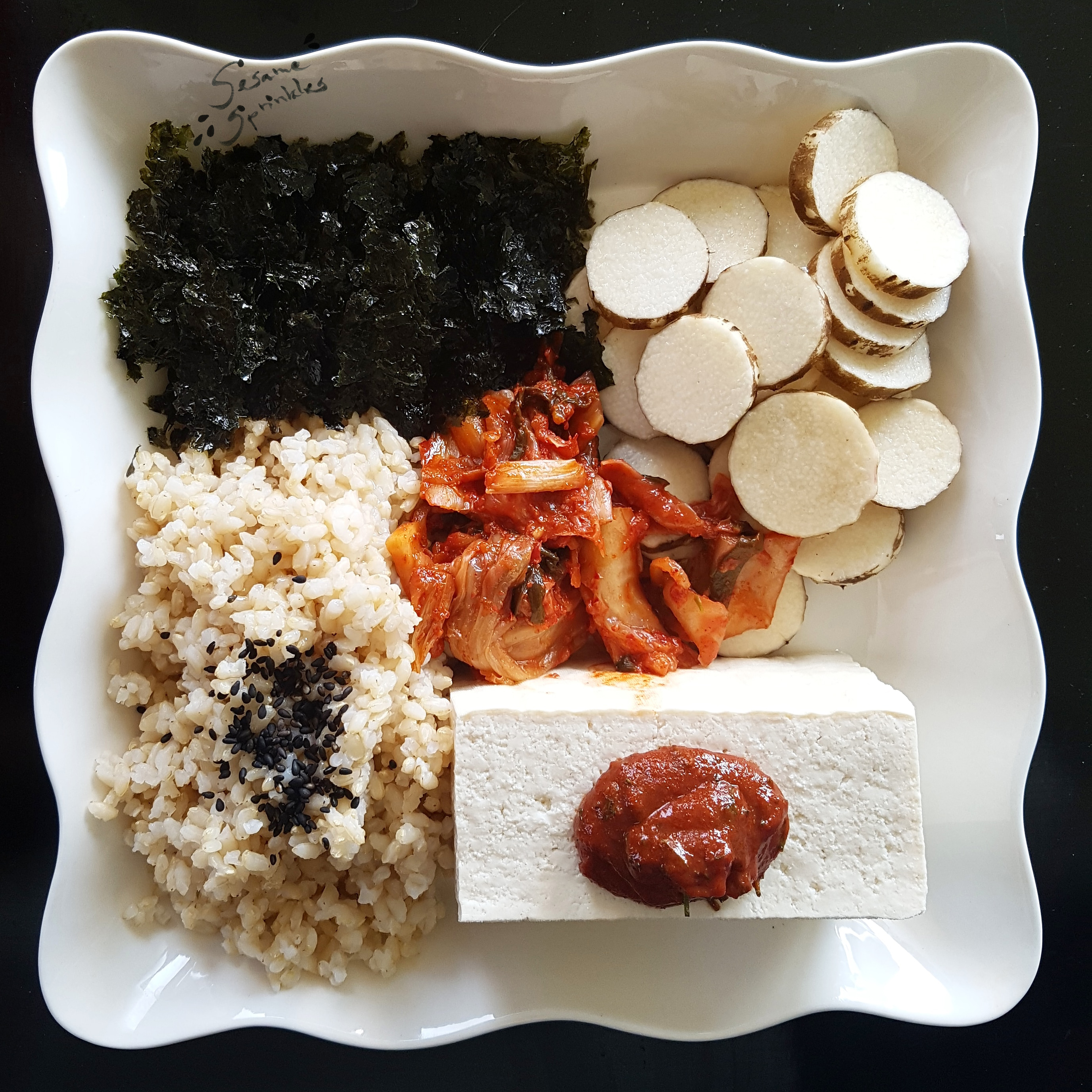
In addition to people with dietary restrictions or personal preferences, this page is aimed at learners of Korean language 🇰🇷🇰🇵, Korean foodies interested in improving their English skills 🇬🇧🇺🇸 and anyone fascinated by food culture in general. 🥢🍴
If you cannot read Korean yet, here’s an easy and simple guide for learning the Korean letters!
On this page, you can find links to all corresponding articles, which deal with the themes language and food in Korea:
- ❗️🌱 Essential words and phrases for vegans and vegetarians in Korea
- 🇰🇷🔤 How to read and pronounce Korean letters
- 🍪🏷 Tips for quickly understanding Korean food labels
- 🍏🏷 How to understand names on Korean food labels
- 🔎🏷 What information is on Korean food labels in detail
- 🚫🥜 Names of common allergens in Korean (list)
- 🗣💬 How to talk about food in Korean – basics
- 🗣💯 How to talk about food in Korean – advanced: Taste & Texture
- 🗣💯 How to talk about food in Korean – advanced: Food Preparation
- 🍡📚 Korean proverbs related to food and eating
Comprehensive vocabulary for food topics (list) - 🗒🐮 Common animal-based ingredients in Korean
- 🗒🌱 Common plant-based ingredients in Korean
- 🗒🌶 Spices and seasonings in Korean
- 🗒🍵 Beverages and alcoholic drinks in Korean
- 🗒🍽 Table ware and cooking utensils
- 🗒💊 Ingredients of traditional medicine
- 🗒🌎 Not food but related topics on critical issues, e.g. climate change, environmental pollution, animal exploitation
- … [further suggestions?]


 Sesame Sprinkles